About
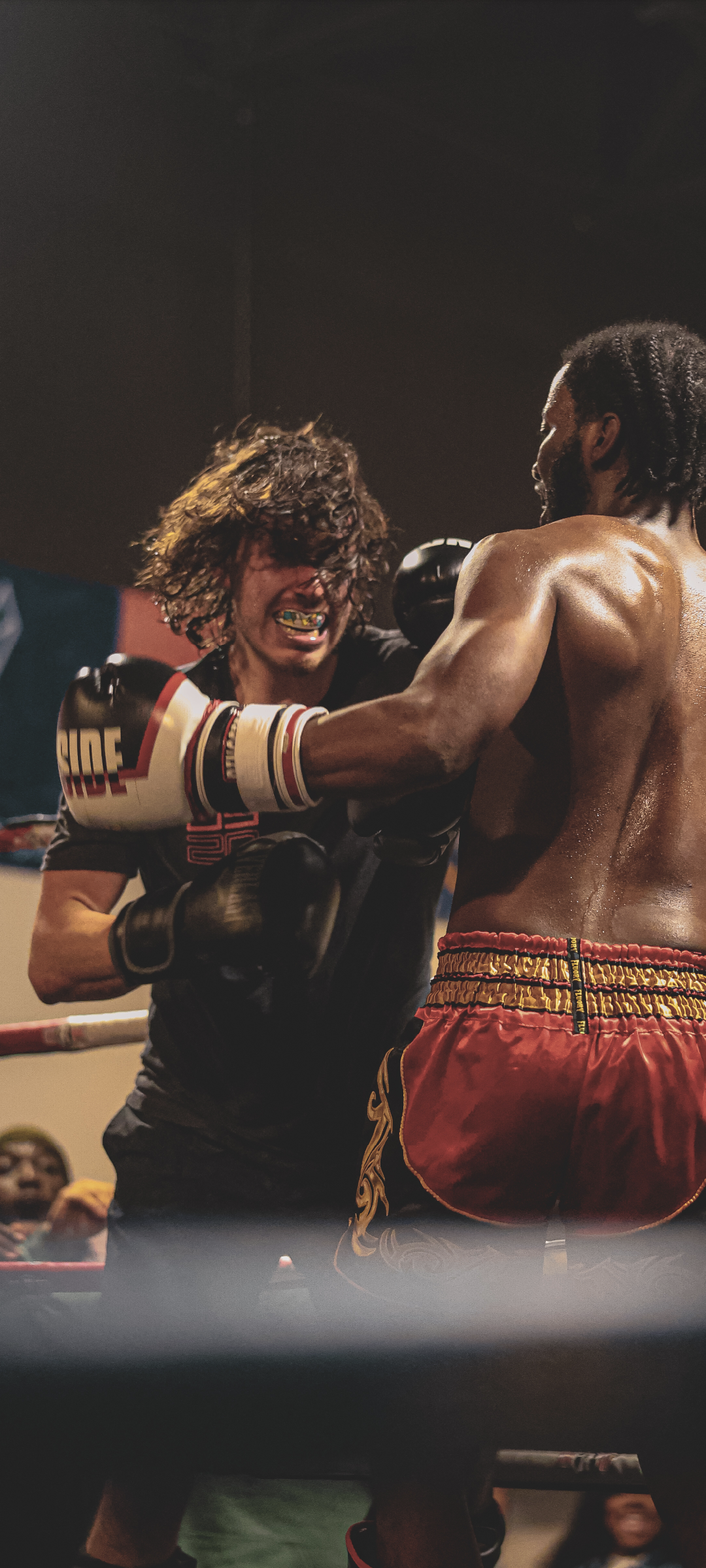
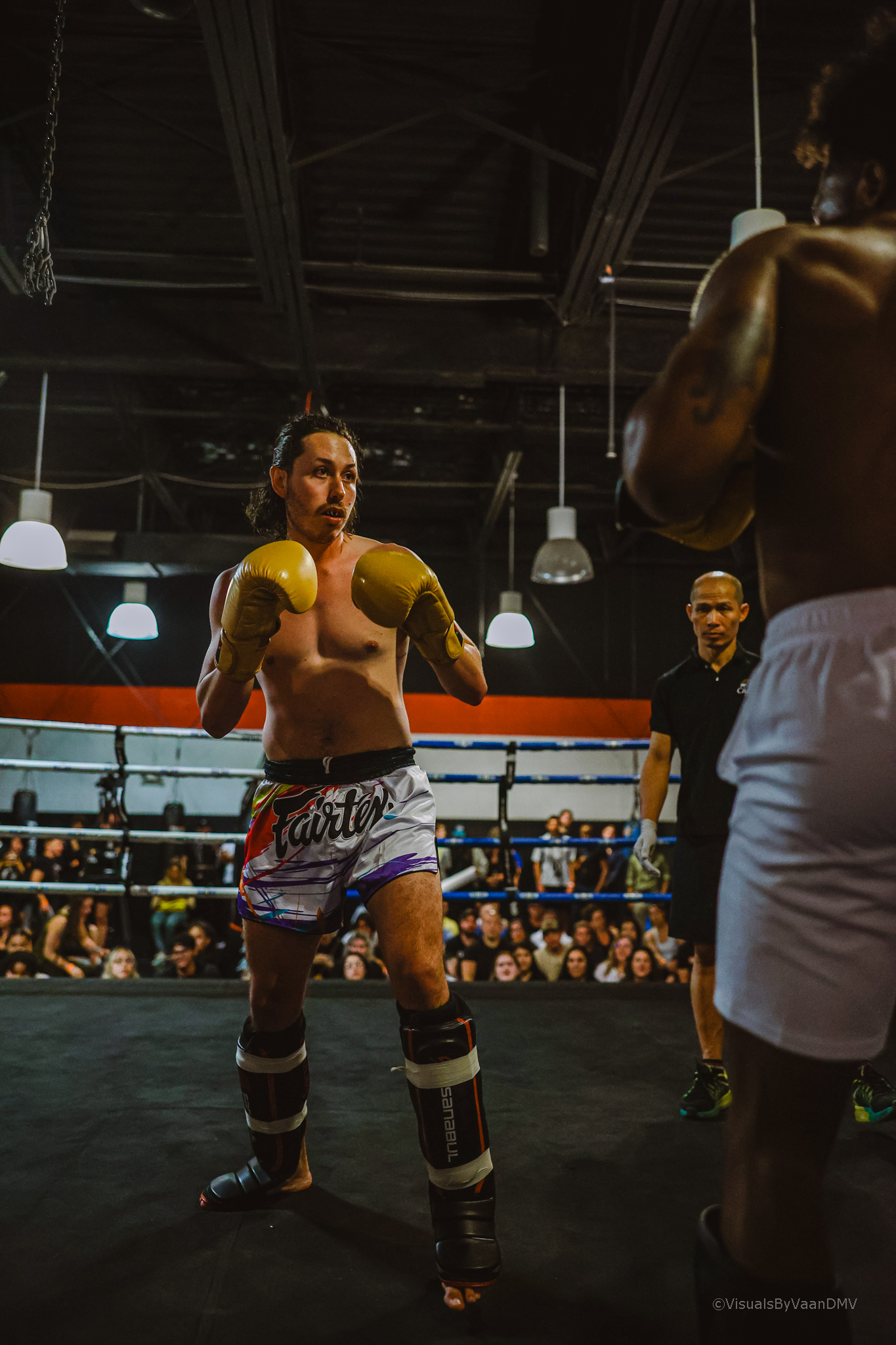
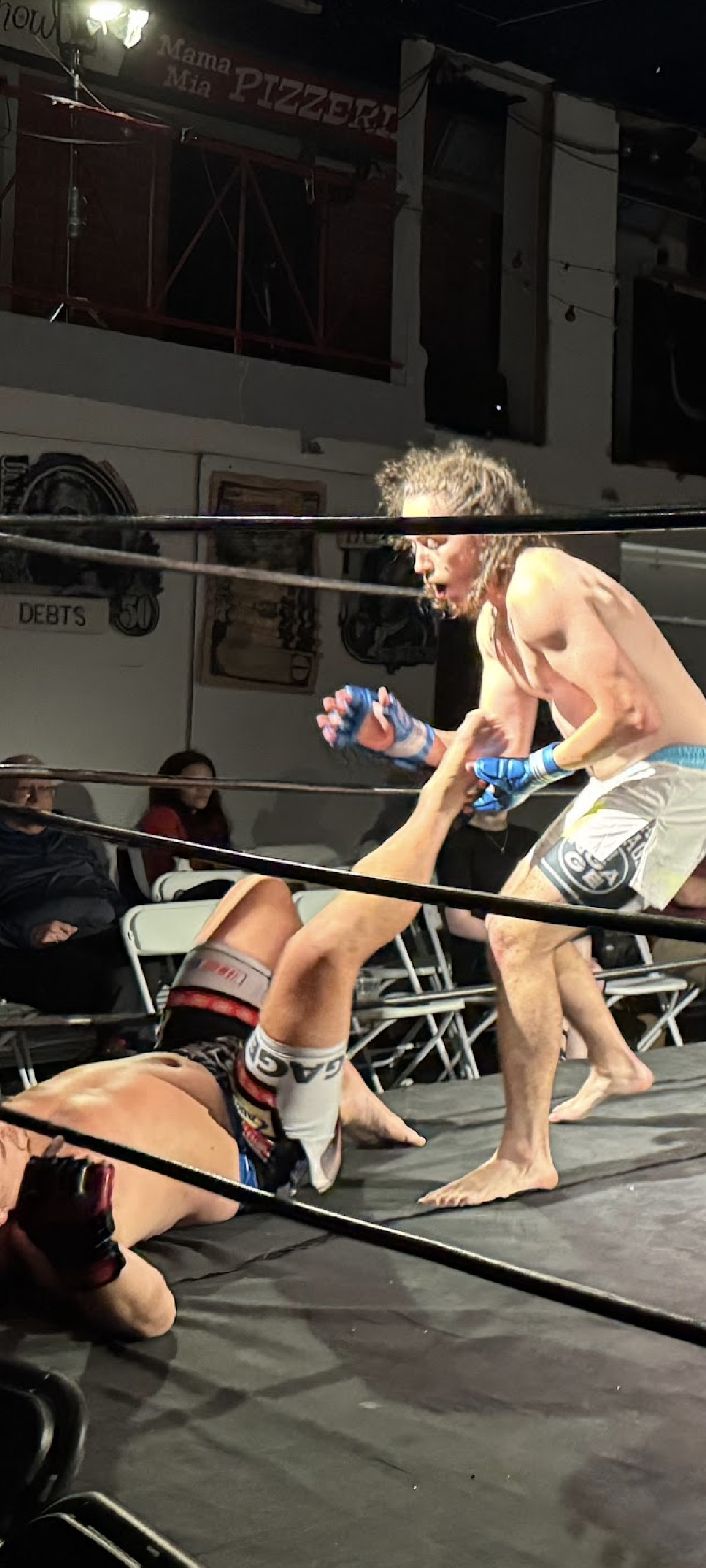
"I got a second-round knockout. The coach came up and said, ‘You want fight number three?’ And I was like, ‘Dude, I’m writing a play about this. I’ve got to go focus.’” -Sam Beeson Interview with LowKickMMA
The concept began in early 2021, when some of my college friends introduced me to MMA. It was UFC 254: Gaethje vs. Nurmagomedov, a lightweight title fight for the undisputed champion. To outsiders, cage fighting is a brutal spectacle, defined by tense anticipation as two world class athletes crash together to earn a paycheck. But as the card progressed, the commentators told each fighter's story and combined it with an electrifying pre-fight promo video, a genuine excitement sparked to see them compete.
A few fights earlier, a bloodied athlete praised the fans and the UFC for the opportunity to compete. What mindset does it take to succeed (and be grateful) in this business, and how do fighters draw in viewers?
Inspired by these questions, and with no writing or fight experience, I began drafting the play. It quickly became evident that simply writing 'They do a complicated boxing routine' as a stage direction would not capture the desired effect. I needed to find the purpose behind each punch. This realization led me to join a fight gym in Washington D.C. I threw my first punch in August 2023, and by January 2024 I had booked my first fight. That May, I won my fight in the second round by TKO (Technical Knockout). These firsthand experiences reshaped the story I wanted to tell, as the camaraderie and support from other fighters, along with the relationships with my coaches, paved the way for a deeper connection to the sport. I still faced a major challenge: how connnect the fight world with live theatre?
Mainstream sports are easy for fans to follow because they have built-in ways to create loyalty: home cities, team colors, logos, etc.
In fightsports, those clear-cut identifiers are missing, so organizations like the UFC, ONE, PFL, etc, must act as storytellers. They highlight fighters’ personal goals, introduce their families, and show the sacrifices involved on the road to Fight Night. They make you want to root for the fighters! It became clear that the play couldn't just be about wanting to be tough or bloodthirsty; it had to be personal, and the script evolved into what it is today.